
(中文翻译在英文正文之后)
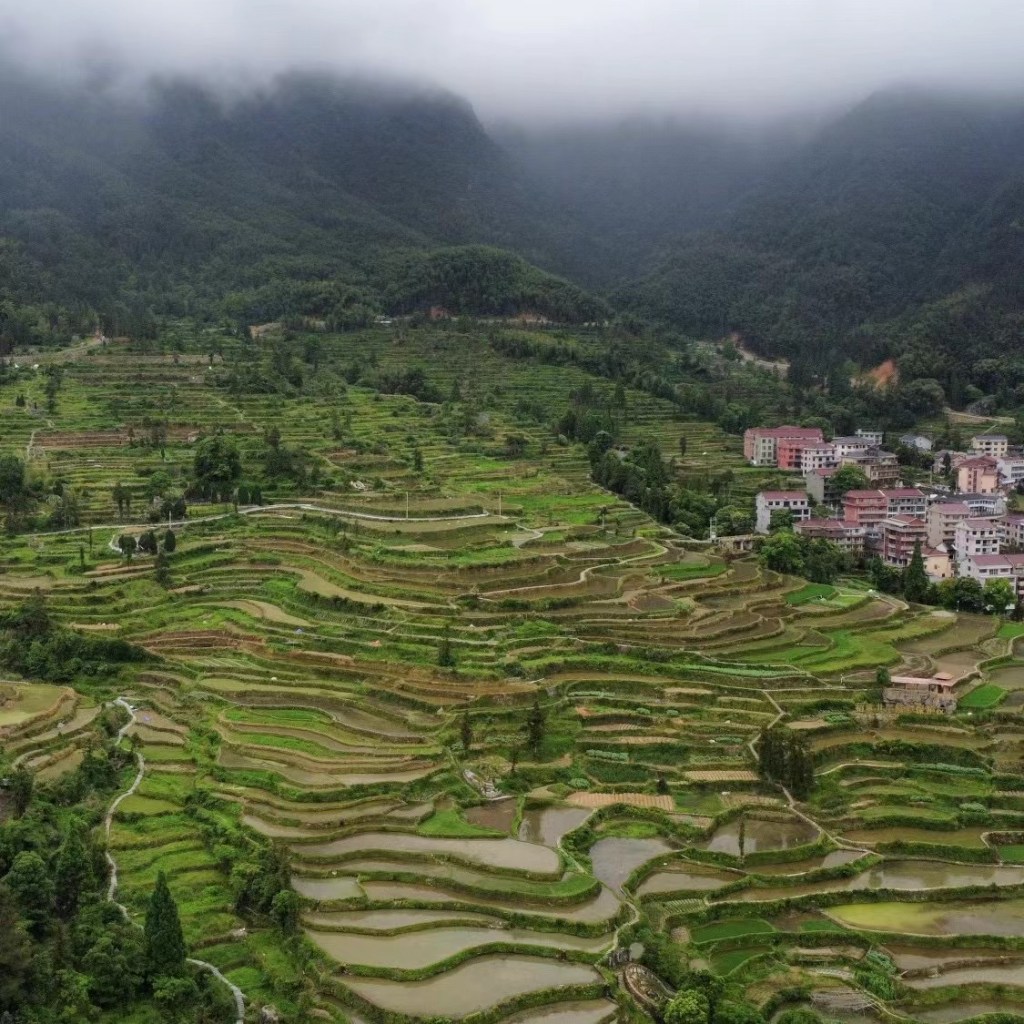
A few weeks ago I walked with my walking fellow through the rice terraces of Longxian village. This village in Zhejiang’s Qingtian county is known for its traditional Rice-Fish Culture system, a unique circular system that in 2005 was recognized as Globally Important Agricultural Heritage System.
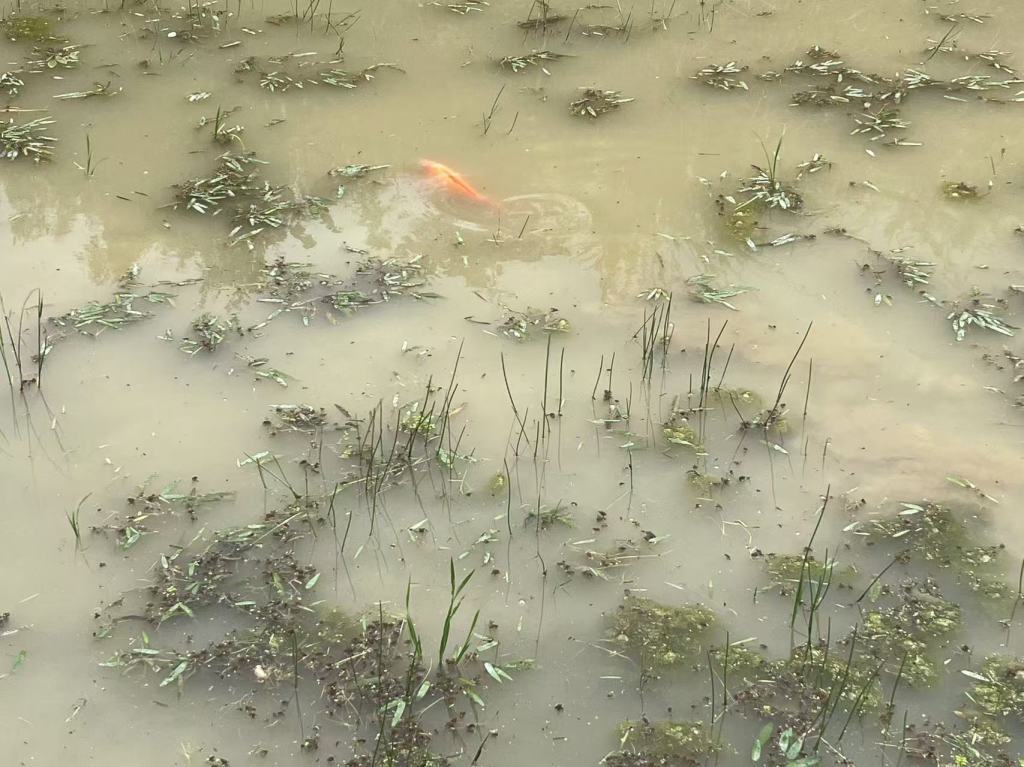
Rice-fish farming is an ingenious traditional agricultural method that has been practiced in China for over 1700 years. According to some sources it was already practiced during the Han Dynasty, more than 2000 years ago. Within this system, no pesticides, herbicides or fertilizers are used. Fish swimming in the water of the terraces eat hoppers and weeds and fertilize the rice at the same time. The swimming softens the soil and adds oxygen into the water. When the rice plants are fully grown, they can offer shade to the fish. More importantly, the terraces help to collect rainwater and reduce the risk of mudslides and flooding.
Due to urbanization and industrialization in agriculture (monocultures), China’s areas of rice-fish farming land decreased considerably, also in Qingtian County. Many residents of Longxian village have emigrated since the 1980ies. The main source of income for the older people who still live here is money that is transferred by emigrated children and grandchildren. The income from agriculture is minimal and the work is mainly done by these elderly who stayed behind.
Early this century the village has been designated as a pilot, supported by local, national, and international stakeholders. The restoration of the rice fields at the heritage site has had a positive effect on ecosystem services, especially water quality. Still no large-scale machines are used, but mainly manual labor and traditional methods, this time supported by solar energy, modern measuring equipment and some other tools. The project contributes to the species richness of crops, but also to the return of local fish species such as the Oujiang red carp. Some young workers also seem to be returning. About 10 percent of the 500 hectares of rice terraces have been restored and protected already.
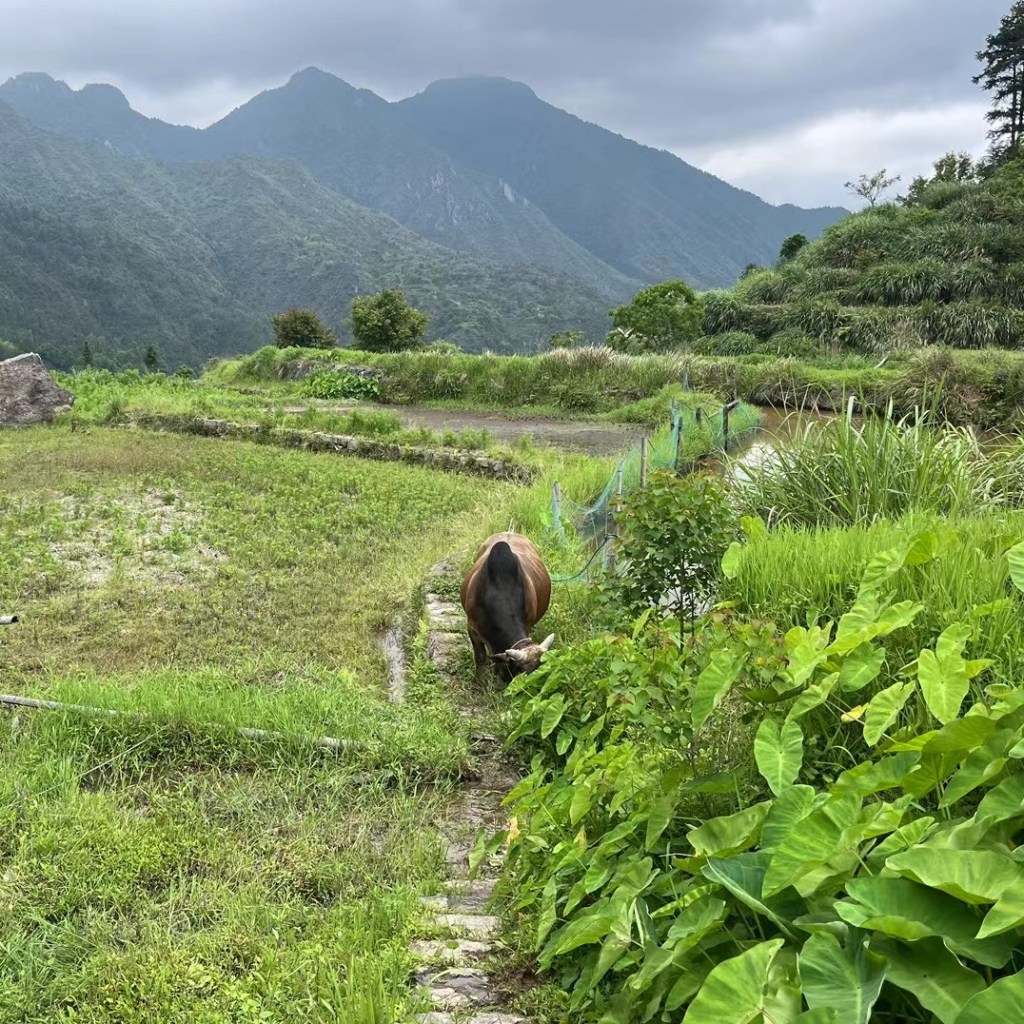
The quality of the environment has improved considerably as well. Ecotourism could generate new income, although the number of visitors is still low. Apart from some local people, we didn’t encounter any tourists during our walk, which is actually quite nice and peaceful.
几周前,我和徒步伙伴一起经过龙现村的水稻梯田。这个位于浙江省青田县的村庄以其传统的稻鱼养殖系统而闻名,这是一种独特的循环系统,于 2005 年被认定为全球重要农业遗产系统。
稻田养鱼是一种巧妙的传统农业方法,在中国已有 1700 多年的历史。据资料记载,它在 2000 多年前的汉朝就已经存在。使用该系统无需杀虫剂、除草剂或肥料。存活于梯田水中的鱼以料斗和杂草为食,排泄物可给水稻增肥。此外,鱼游泳可以软化土壤并向水中增加氧气。当稻株完全长高时,也可以为鱼遮阴。更重要的是,梯田有助于收集雨水并降低泥石流和洪水的风险,更有利于对抗自然灾害。
由于农业的城市化和工业化(单一养殖),中国的稻田养鱼面积大大减少,青田县也是如此。自 1980 年代以来,龙现村的许多居民已经移民。仍然住在这里的老年人的主要收入来源是移民子女和孙辈从海外邮寄的钱。农业收入微乎其微,耕种工作主要由这些留守的老人完成。
本世纪初,该村已被指定为乡村振兴的试点,得到地方、国家和国际相关部门支持。稻鱼田的恢复对生态系统设施产生了积极影响,尤其是水质。仍然不需使用大型机器,而主要是体力劳动和传统方法,配合使用太阳能、现代测量设备和其他一些工具。该项目有助于农作物物种的丰富性,也有助于当地田鱼的回归。现在,年轻人也有回归乡村的迹象。500亩农田中有约10%已经被恢复和保护。
环境质量也得到了显著提高。生态旅游也可以产生新的收入,尽管游客数量仍然很低。我们在途步时没有遇到太多游客,基本是本地人,这其实也是另一番美好和宁静。
 乡村足迹 Rural Footprints