
(中文翻译在英文正文之后)
May 2025
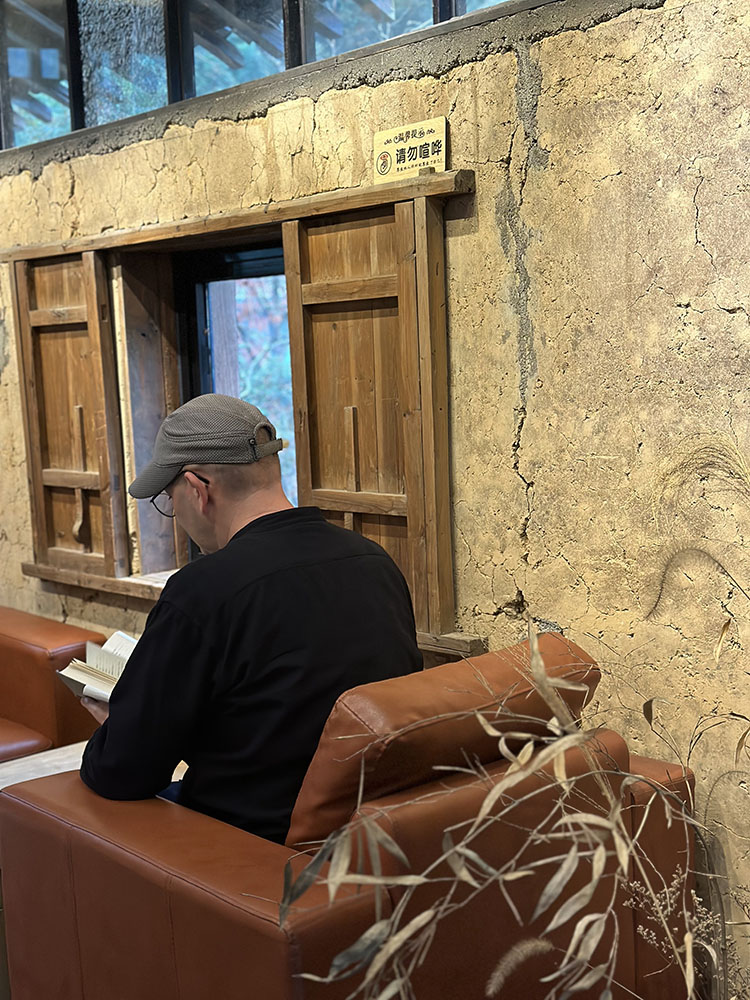
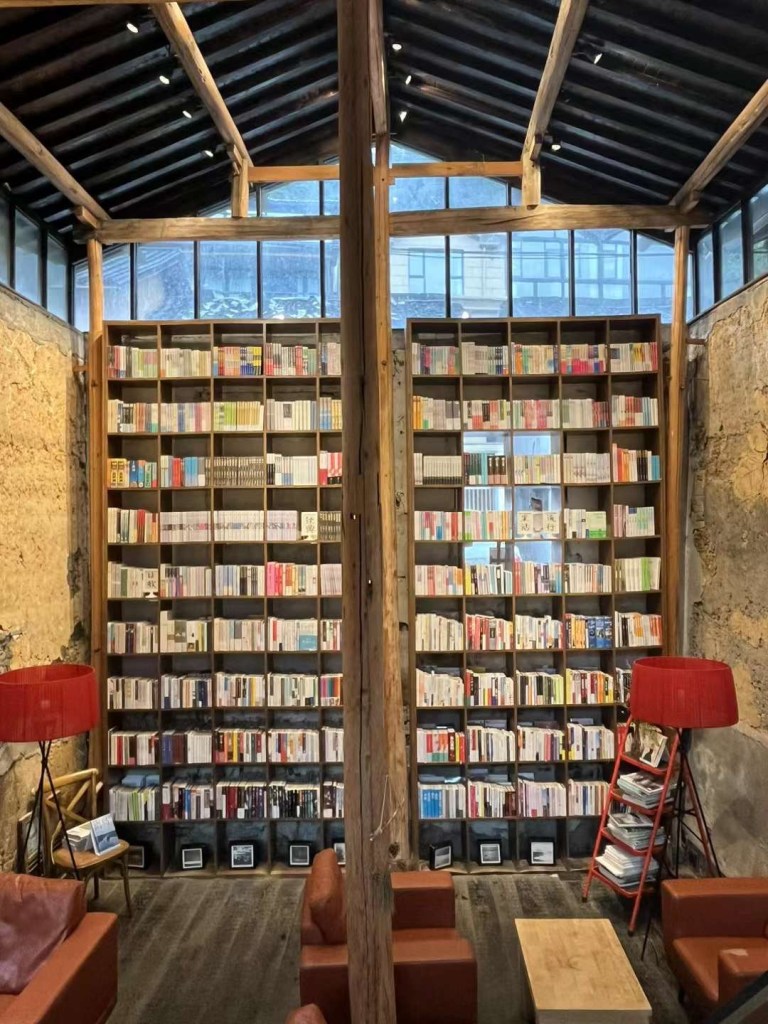
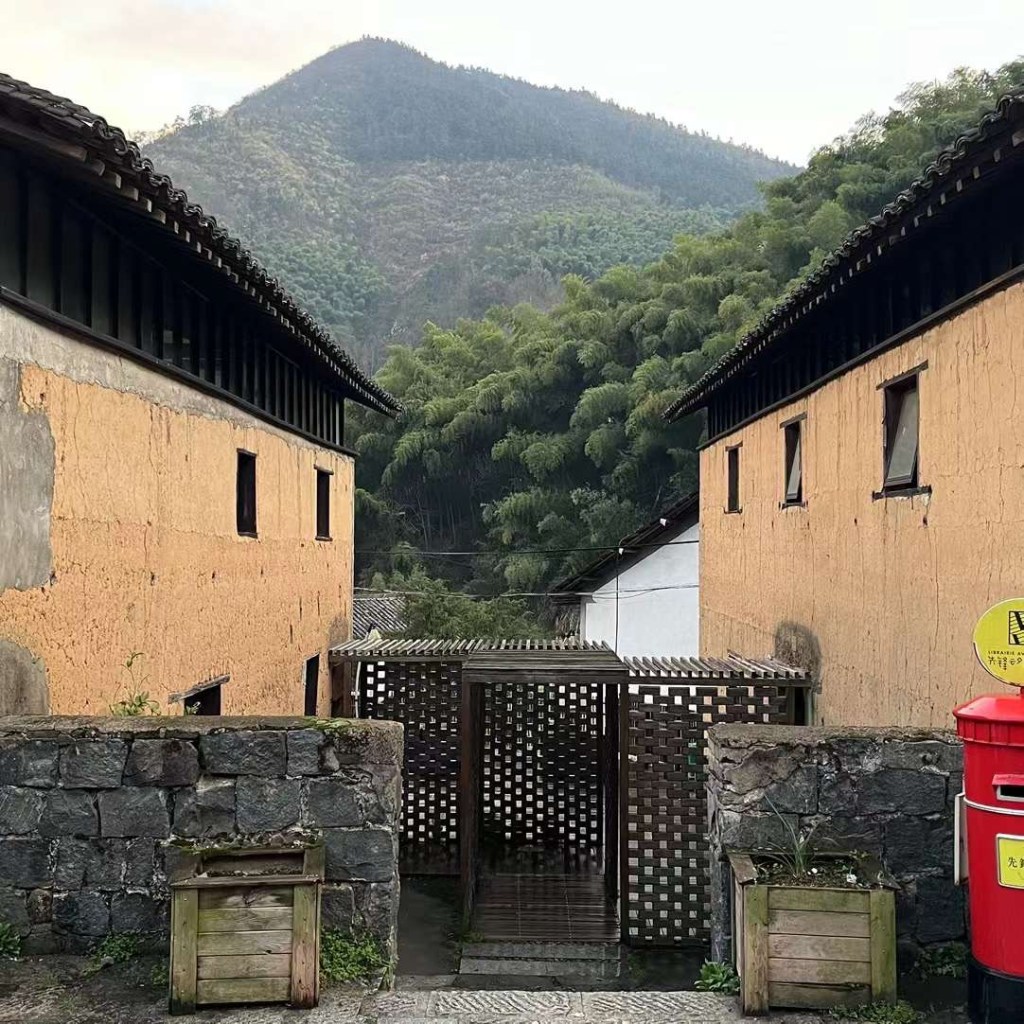
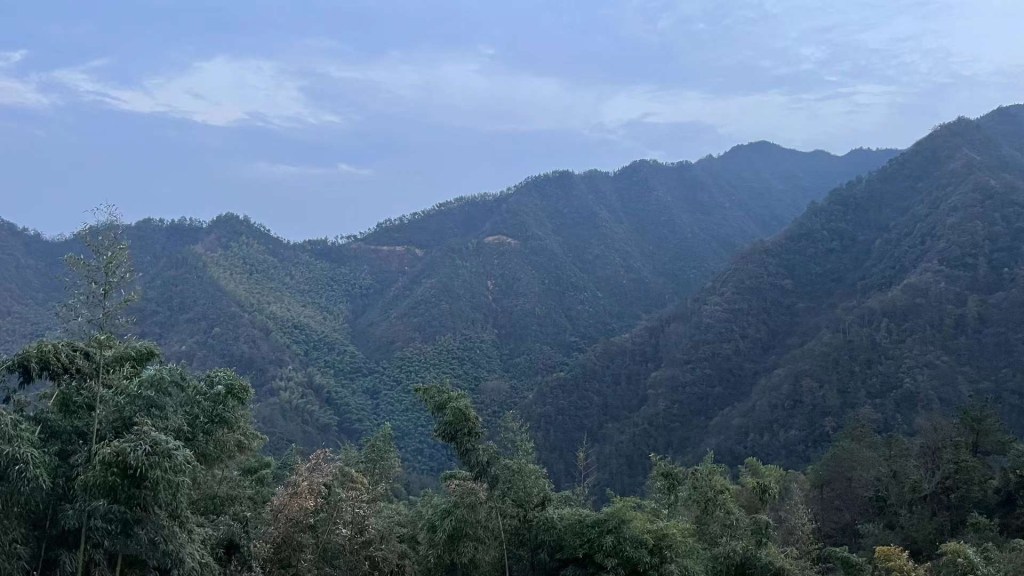
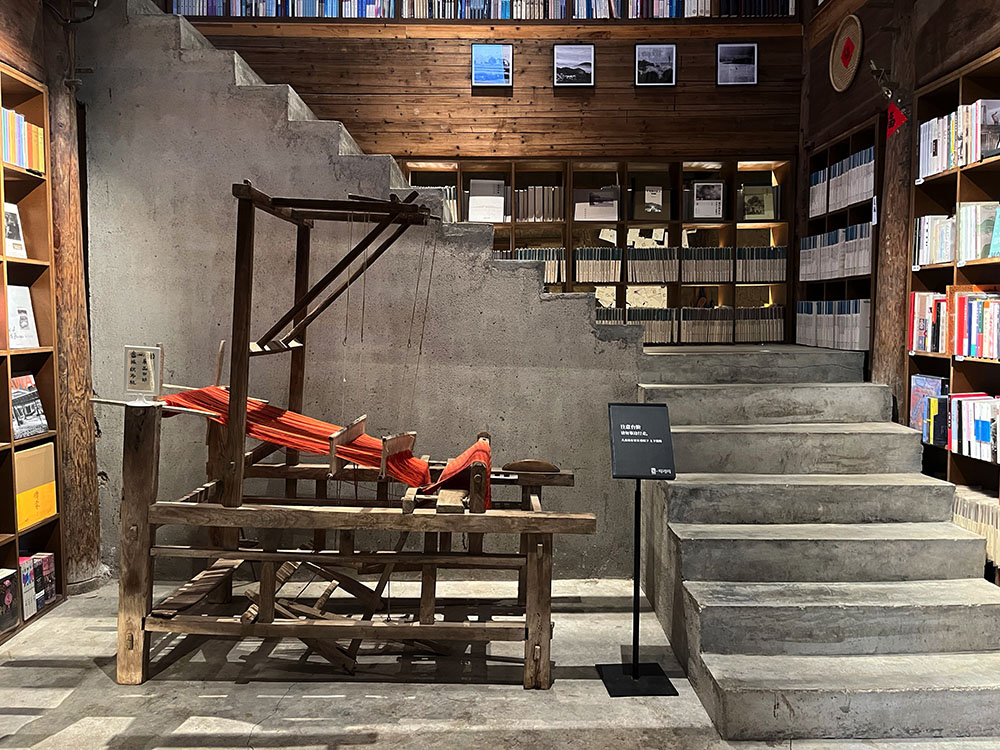
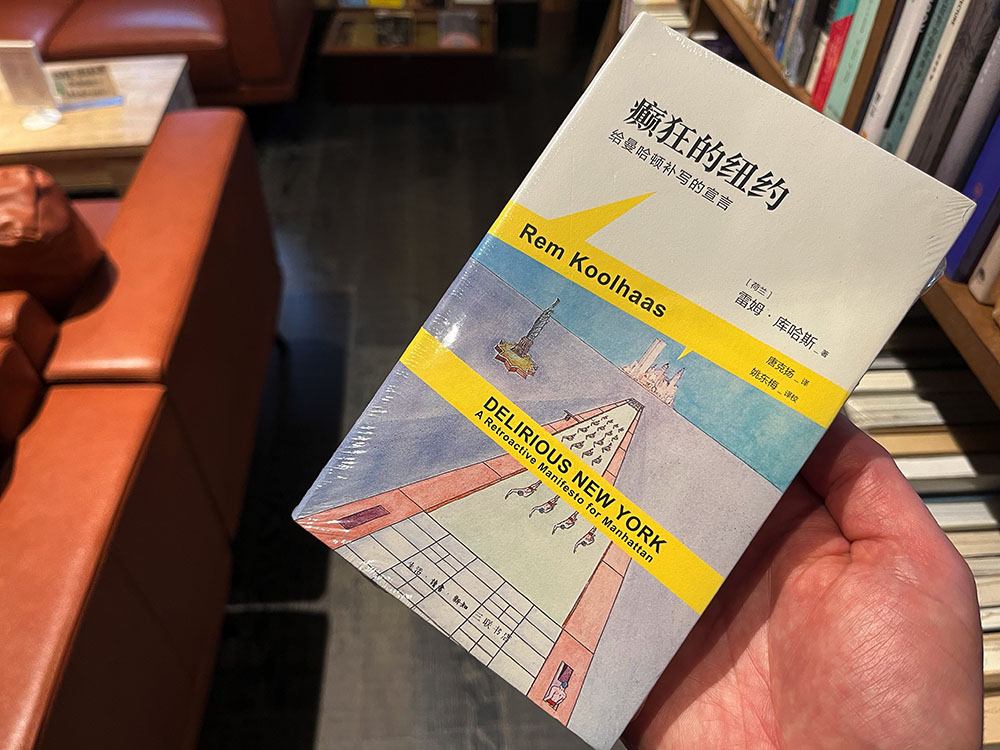
Nice! Now let’s take a photo with a book in your hand! We are in a bookstore at an altitude of 686 meters, halfway up a mountain, a reused building within the Eshan She Ethnic Township. The village is inhabited by an ethnic minority, located more than two hours’ travel south of the city of Hangzhou. I walk here with two plastic surgeons, one of whom was born in a village nearby. Both work in Hangzhou’s CBD, but return to the countryside every week. We photograph each other in different poses, standing among bookshelves full of internationally known titles, classics, and translated literature, including a striking number of architecture books, from Italo Calvino to Rem Koolhaas. Due to incentives by authorities, brand new bookstores can be found in many remote villages. In this case designed by Zhang Lei.
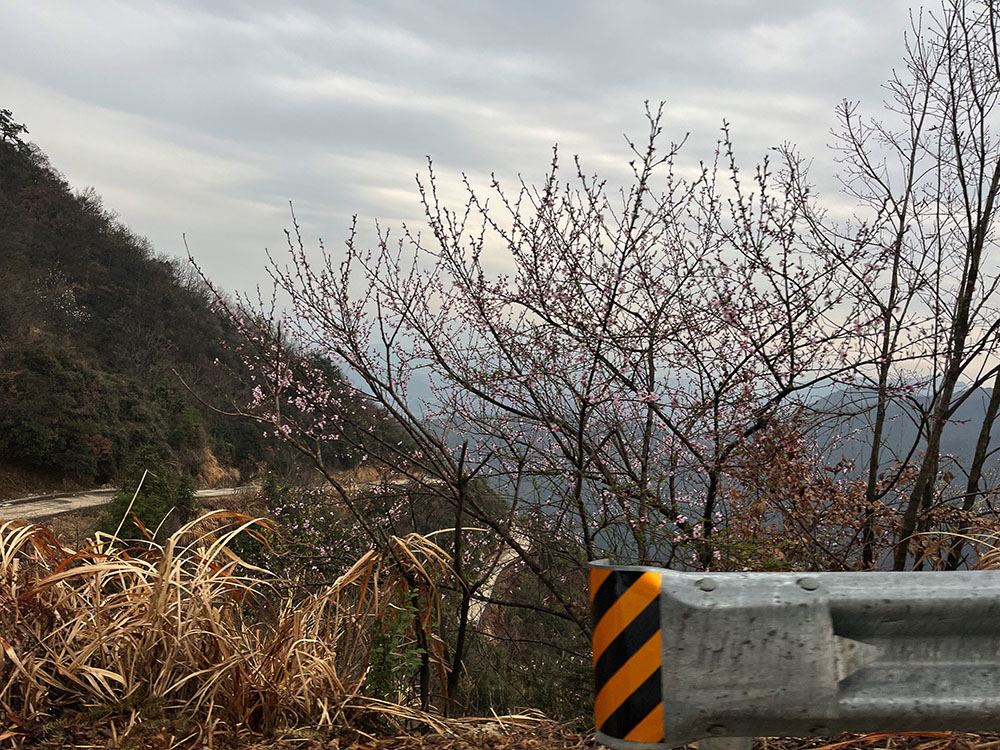
We came here by electric car. Because the village is not on the map, we used our mobile phone for navigation. However, there is no stable internet signal at this altitude. Some of the road signs also appeared to be missing on these remote rural roads. After a wrong turn we ended up on a very steep mountain path with multiple hairpin bends. Too narrow to turn the car, also the guardrail was partly missing. So we got to the top of the mountain, at about eleven hundred meters, where we found an isolated radar post (no cell site). Meanwhile it started to rain. With surgical precision we drove down and parked halfway up the slope to continue walking to the village. After some inquiries we found the bookshop.
Apparently we were not the only visitors to the bookstore, there were three others. How can a bookstore here survive from half a dozen selfie-taking visitors who don’t buy books? The cappuccino and spaghetti that the bookstore sells tastes excellent and is more expensive than in Shanghai. For many in the countryside, this is much more than a day’s wage…
After browsing through some books, we continue walking outside the village along a mountain stream. Two wagging dogs follow us curiously and an old villager shout something unintelligible to us in dialect. We see an old man washing himself further down in the mountain stream. The water is clear, cool and, according to villagers, drinkable.
We are very welcomed here, but how many visitors can a village handle before they become a nuisance? What happens if the narrow mountain path is widened, or is it better to keep the path narrow? Most of the original villagers still present are rather old. This village of about fifty houses counts a dozen properties now that are used as B&Bs. The store is presented as a form of low-impact development because book lovers are seen as civilized: “they don’t leave litter on the paths”.
2025年5月
太美了!现在让我们拿一本书在手里拍张照吧!我们在海拔 686 米的半山腰处的一家书店里,这是一栋重修的建筑,位于少数民族聚居的峨山畲族乡,距离杭州市南部两个多小时的路程。我和两位整形外科医生一起在此途步,其中一位出生在附近的一个村庄。他们都在杭州的 CBD 工作,每周都会回乡。我们摆不同的姿势互相拍照,站在摆满国际知名书籍、经典和翻译文学的书架中间,其中也包括数量惊人的建筑书籍,从伊塔洛·卡尔维诺到雷姆·库哈斯。由于政策的支持鼓励,许多偏远村庄都有书店。我们所在的书店由国内知名建筑师张雷设计。
我们是开电动车来到这座山。因为村庄不在地图上,所以我们用手机导航。然而,在这个海拔高度没有网络信号。在这些偏僻的乡村道路上,一些路标也无找到。拐错弯后,我们开上了一条非常陡峭的山路,山路曲折多弯而且太窄,车子无法转弯,路边的护栏时有时无。继续往上开,大约海拔一千一百米,我们发现了一个孤零零的雷达站,但无法打电话。与此同时,天开始下雨。于是我们以外科手术般的精准度开车下山,把车停在半山腰,继续进村徒步。经过一番询问,才找到了这个书店。
我们似乎并不是书店唯一的游客,还有另外三个。书店如何能承受得住六七个自拍而不买书的游客?书店卖的卡布奇诺和意大利面味道极佳,价格比上海贵得多。对于农村,这可比一天的工资还要多……
浏览完一些书后,我们继续沿着山溪向村外走去。两只摇尾乞怜的狗好奇地跟着我们,一位老村民用方言喊着我们听不懂的话。我们看到一位老人在山溪下游洗澡。水清澈、凉爽,据村民说,可以饮用。
看来我们在这里很受欢迎。但一个村庄能容纳多少游客,才不致过度拥挤?如果把狭窄的山路拓宽,会更方便还是最好保留原状?现在还住着的大多数原始村民都相当老了。这个大约有五十户人家的村庄,现在有十几处房产被改造为民宿。这是一种低影响的发展形式,而且爱书人被视为文明人:“他们不会在路边留下垃圾”。
 乡村足迹 Rural Footprints