(中文翻译在英文正文之后)
March 2024
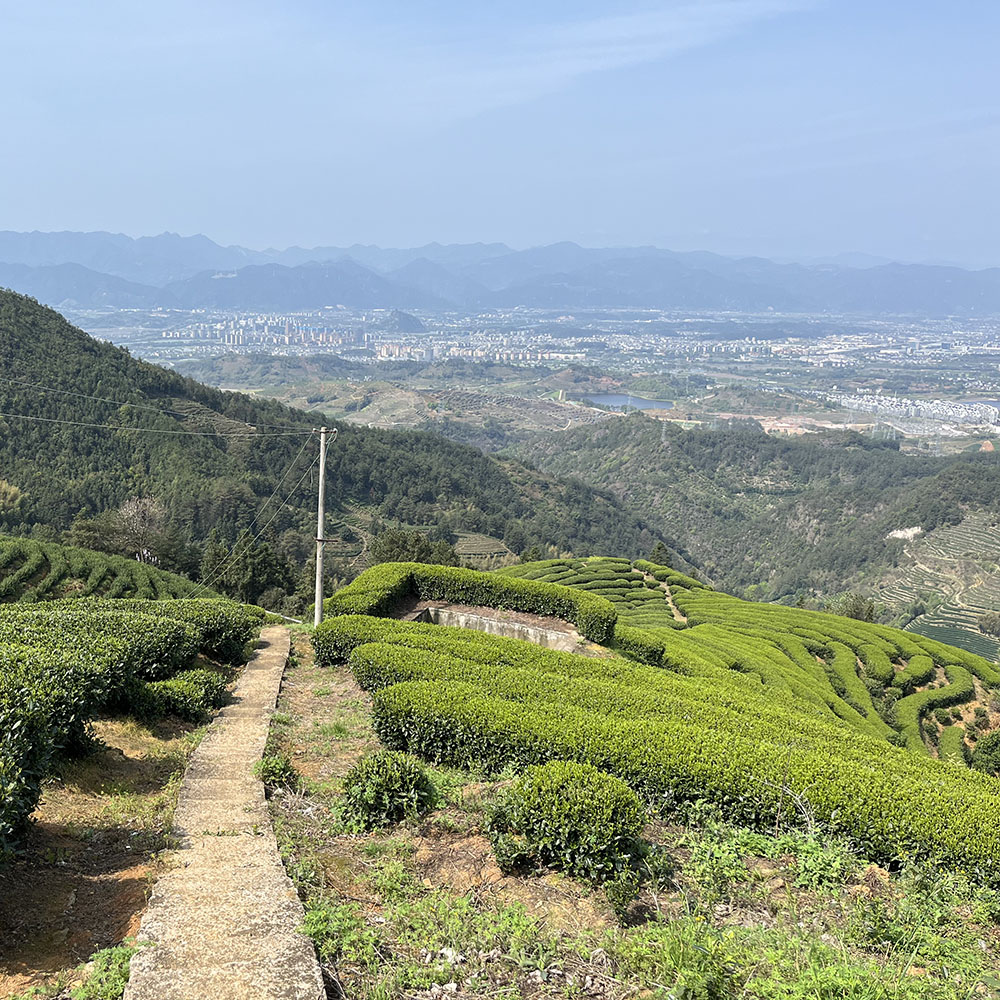
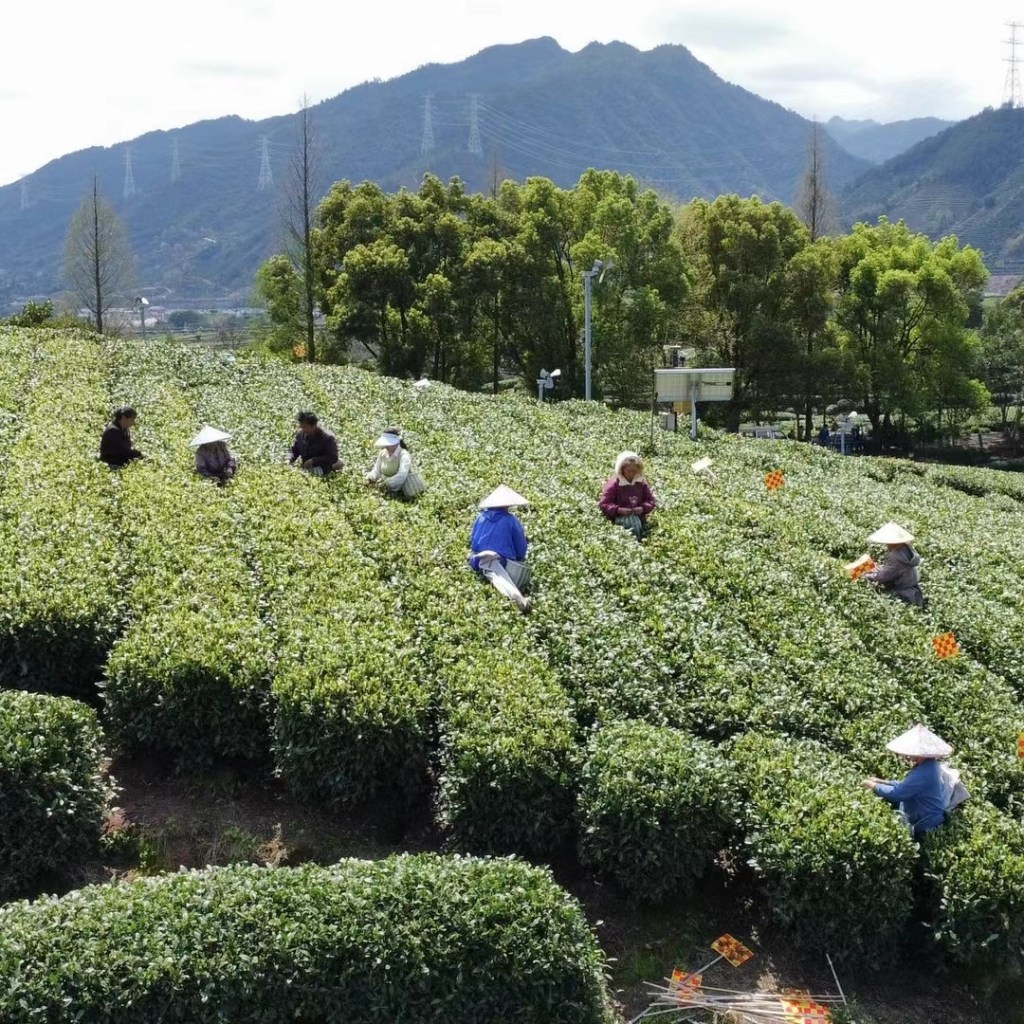
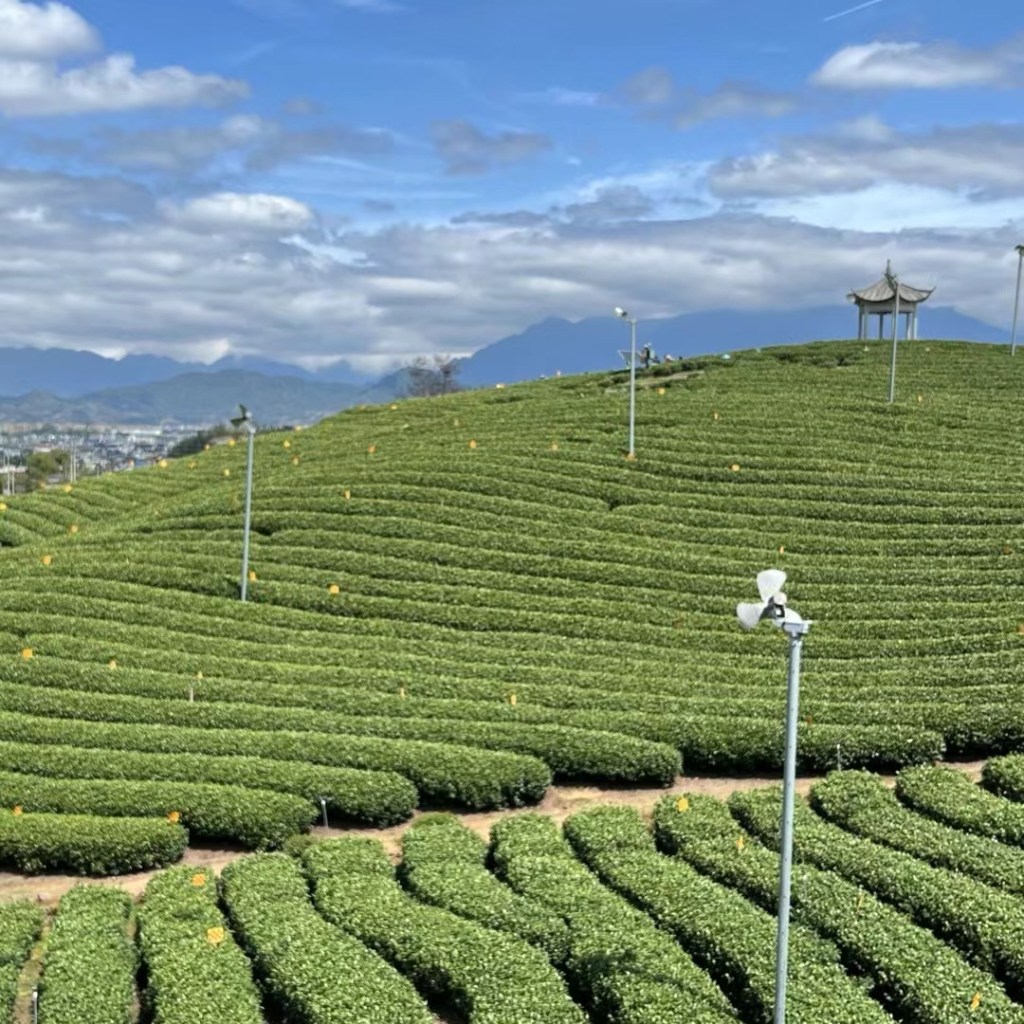
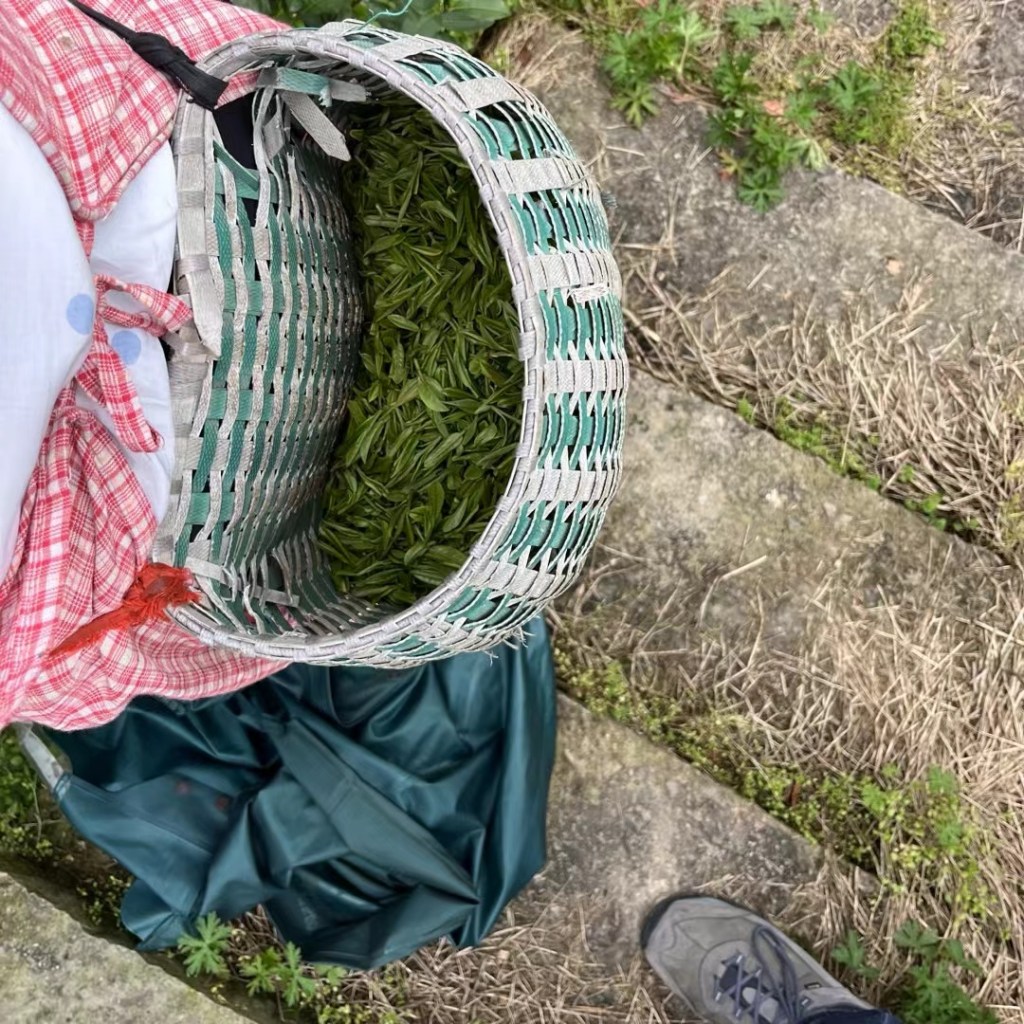
We are walking through a huge mountain-covering tea plantation. A few hundred meters below us in the valley we see small-scale clustered plantations. These are older small family businesses, they share facilities as a collective. Earlier today we visited one and tasted fresh tea at their kitchen table. The mother of the house gave us two tangerines and a large juicy apple, which we are eating now.
Songyang is connected to the Tang Dynasty trail system that was originally used for tea transport. There is no country in the world with such a rich tea culture as China. The first tea is said to have been consumed in southwest China about three thousand years ago. During the Tang Dynasty, tea drinking was popularized, no longer only for the elite. I still remember that around the millennium I couldn’t find coffee in Shanghai. However, today the city of Shanghai counts more than 8,500 coffeehouses. There is “almost” no tea to be found. Good and affordable tea is becoming scarce. Tea is gold. People in Songyang are well aware of this.
China’s spatial planning has a rule that agricultural land sacrificed for urban expansion must be compensated within its own municipal boundaries. Sometimes this compensation is traded with neighboring municipalities. The ancient town of Songyang, beautifully situated in the valley, has grown considerably. Tea fields, which were originally only found in the valley, crept up the hills last decade, partly as building construction compensation areas. However, this required forests to be cut down. Fortunately, that is no longer allowed. There are even serious penalties for cutting down trees. First of all, this is a climate adaptation measure to counter extreme weather events due to a changing climate, such as the hailstorm this week in neighboring Jinhua and also a month ago elsewhere in Zhejiang.
Nationwide new trees are being planted en masse, not only as decoration but also to provide shade and other ecosystem services. China’s Ecological Civilization thinking focuses on a new balance between city and countryside, respect for landscape and nature. Although this is not yet smooth sailing, there are many lessons to be learned here for other countries. We continue walking.
2024年3月
我们正穿过一座巨大的山坡型茶园 。向下俯视几百米的山谷里,聚集着几个小规模种植园。这些都是老式的小型家族企业,几个茶园集体共享设施。今天早上我们还参观了一家餐厅,并在他们厨房的餐桌上品尝了今年新茶。老板的母亲给了我们两个橘子和一个多汁的大苹果,我们现在正在吃。
松阳与古道相连,最初是唐代用于运输茶叶的步道系统。世界上没有一个国家像中国这样拥有如此丰富的茶文化。据说,第一种茶大约在3000年前就在中国西南地区被人们饮用。在唐朝,茶饮开始普及,不再只为精英阶层享用。我还记得千禧年前后,我在上海找不到咖啡。然而,今天的上海有8500多家咖啡店。很难找到好茶。物美价廉的茶越来越稀缺。茶是金子。松阳人很清楚这一点。
中国的空间规划规定,为城市扩张牺牲的农业用地必须在其城市边界内得到补偿。有时这种补偿会与邻近省份进行交易。松阳古镇坐落在美丽的山谷中,发展迅速。最初只在山谷中发现的茶园,在过去十年里悄悄爬上了山丘,部分是作为土地补偿区。然而,这需要砍伐森林。幸运的是,这种情况已不再被允许。砍伐树木甚至会受到严厉的惩罚。首先,这是一项气候适应措施,旨在限制气候变化的风险——就像刚刚在邻近的金华发生的那样。
全国范围内的新树木正在大规模种植,不仅作为装饰,还提供树荫和其他生态系统服务。中国的生态文明思想注重城市与乡村、尊重景观与自然的新平衡。尽管这不是一帆风顺的,但对其他国家来说,这里有很多教训可以吸取——–我们继续徒步。
 乡村足迹 Rural Footprints