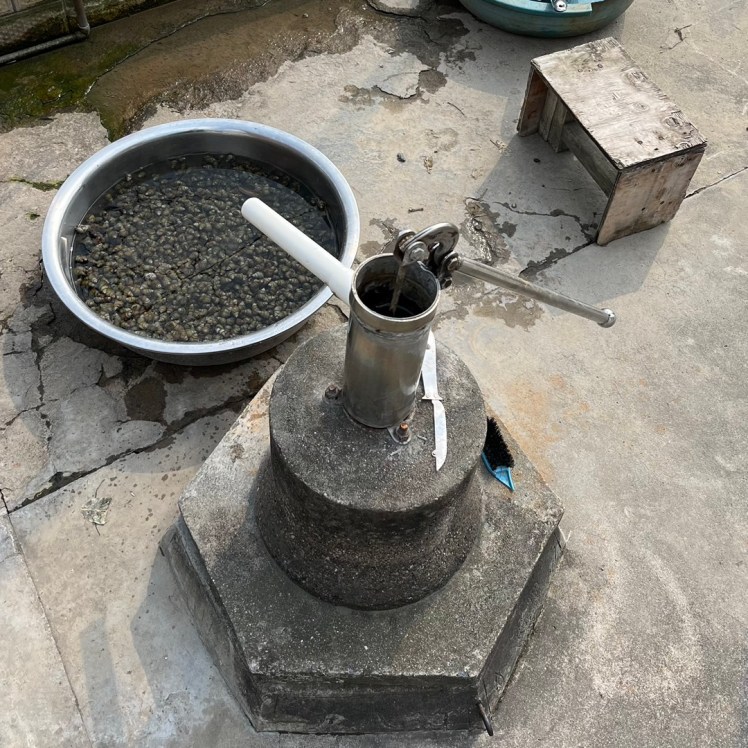
20 世纪 80 年代的水泵(哈利摄)water pump from the 1980s (photo Harry)
(中文翻译在英文正文之后)
December 2023
“Let’s take this road—there are no cars there,” says my walking companion as we stand at an intersection. Not long after, this turns out to be a golden choice. We chat with some elderly residents in their yards, including a very old woman who speaks only the local dialect. In their front yards, we see wells from different generations. Drinkable water is available at a depth of four to five meters, and we get to taste it from an old rice bowl. It’s fresh and clean—delicious!
As we continue walking, we meet a middle-aged man who tells us about a recent discovery deep underground. He leads us to what appears to be a simple, newly sealed well on a construction site. He then calls his son, insisting we need to speak with him. His son, who works for the village collective, offers us a tour by car. Since we prefer to explore on foot, we decline his kind offer but ask about the well. It turns out to be a potentially medicinal hot spring. The village collective plans to build a resort here and has already invested heavily, drilling to a depth of about 1.7 kilometers.
Unfortunately, the pandemic and real estate crisis disrupted their plans. The reserved land remains vacant, waiting for investors. Still, the village has done well in recent years. Villagers have created landscaped parks with chrysanthemums, water lilies, and orchards, attracting seasonal day-trippers—including internet celebrities. Located three hours north of Shanghai, the village is one of hundreds designated as national model villages for rural revitalization.
Interestingly, in Shanghai, groundwater was heavily pumped for drinking water until 1963, when a deep-well regulation was introduced to prevent subsidence. Since measurements began in 1921, the city has sunk significantly, causing issues for water management, flood defenses, and structural stability. This subsidence wasn’t just due to excessive groundwater extraction but also the sheer weight of new infrastructure and high-rise buildings. Today, Shanghai’s drinking water comes from the Yangtze River
The village we’re walking through is actually known as a longevity village—the oldest people in Jiangsu Province live here. Clean water, combined with a healthy diet and lifestyle, seems to be the key. The question is whether a resort with large hotels truly belongs here. Perhaps the real treasure isn’t the hot spring, but the elderly residents themselves—their way of life and their stories.
2023年10月
“我们走这条路吧!那里没有汽车”,当我们站在十字路口时,我的徒步同伴说道。之后证实这是一个明智之举。 我们在院子里和一些老人聊天,其中包括一位只会说当地方言的老太太。 我们在他们的前院看到了不同代的水井。 井深四五米有可饮用的井水,我们用旧饭碗品尝了一下,味道好极了! 再往前走,遇见了一位中年男子。他告诉我们一个最近的巨大发现。 于是他带我们来到建筑工地上一口看似简单的新密封井。 而且他打电话给他的儿子,他认为我们需要和他交流一下。原来他的儿子在村委工作,他想让儿子带我们开车去村子游览一番。 由于我们更喜欢徒步,我们便拒绝了他的好意,但想更多地了解这口密封井。 最终我们发现这是一个具有潜在药用价值的温泉。村委想在这里建一个度假村,并投资了大量资金来钻这口井,钻探深度已达约1.7公里!
不幸的是,大流行和房地产危机使这项开发陷入困境。 预留土地目前空置,需要投资者。 不过,最近村里的发展倒是不错。 村民们建起了一座园景公园,种上了菊花、睡莲和果树,吸引了包括网红在内的季节性一日游游客。该村位于上海以北三小时车程,是数百个国家乡村振兴示范村之一。
有趣的是,在上海这座大都市,饮用水也曾从地下大量抽取,直到 1963 年出台了有关深井的规定以防止地面沉降。 自 1921 年开始测量以来,这座城市已经严重下沉,对水管理、防洪和建筑物裂缝产生了重大影响。 这种沉降不仅是大量抽取饮用水的结果,也是大型基础设施和高层建筑建设的结果,这些都组成了城市的重量。 现在饮用水来自长江。
我们现在走的这个村子其实被称为长寿村:江苏省最长寿的人都住在这里。 清洁的水与健康的饮食和生活方式相结合似乎是实现这一目标的基础。 因此,问题是这里是否适合建造大型酒店式度假村。 真正有价值的可能是这些老人,他们的生活方式和故事。
 乡村足迹 Rural Footprints